Remove grease, don't redistribute it
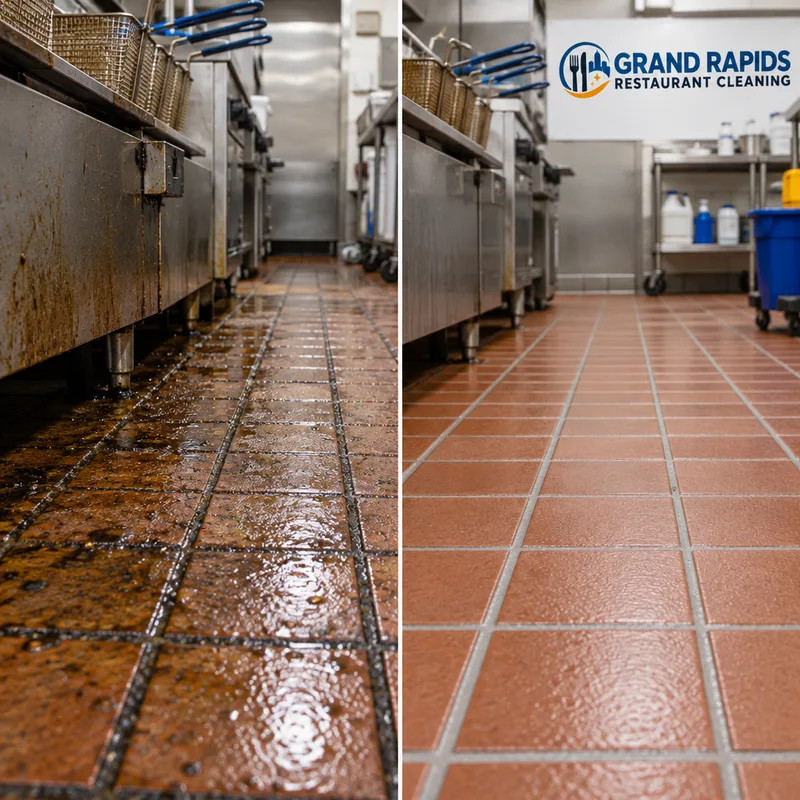
Kitchen floor degreasing needs the right chemistry and agitation, plus full recovery. We focus on pulling grease out of texture, grout lines, and corners where mop water leaves residue.
Serving Grand Rapids, Michigan & surrounding areas
Mon–Fri 8am–6pm · Sat 9am–2pm
Restaurant floor cleaning · Grand Rapids
Keep tile, grout, and quarry floors safer underfoot with scheduled deep degreasing and detail scrubbing that fits your prep and service hours.
Built for working restaurant floors
Commercial Kitchen Floor Cleaning is about more than appearances. In a working restaurant kitchen, grease mist, fryer spillover, tracked-in grit, and sugary drinks build a film that turns tile and grout into a slip risk and a sanitation headache. Mopping spreads that film around. Degreaser choice, dwell time, agitation, and recovery are what actually remove it.
Grand Rapids Restaurant Cleaning provides restaurant floor cleaning services for back-of-house tile, quarry tile, and grout where grease and soil accumulate: cook lines, dish areas, walkways between prep tables, around floor drains, and entrances from loading or dumpster areas. We work around your schedule—after close, pre-open, or between shifts when possible—so the kitchen can reopen with floors that feel clean, not slick.
Our crews operate from Grand Rapids at 1500 Buchanan Ave SW, Suite 5, so getting to downtown, the Medical Mile area, or the 28th Street corridor for repeat service is straightforward. If you want the same team handling broader restaurant cleaning needs beyond floors, you can build a schedule that fits your staffing and inspection realities.
Cleaning scope and outcomes
Kitchen floor degreasing needs the right chemistry and agitation, plus full recovery. We focus on pulling grease out of texture, grout lines, and corners where mop water leaves residue.
When oil film is stripped from tile and quarry surfaces, floors typically feel less slick. We target the areas that create most slips: cook line edges, dish room lanes, and traffic paths.
Restaurant grout cleaning addresses the darkened, sticky grout that holds odor and soil. Detail tools reach edges, cove base transitions, and behind equipment where buildup starts.
Floor drains, door thresholds, and utility penetrations collect heavy soil. Deep cleaning those points helps the whole kitchen stay cleaner between services.
A repeatable cleaning scope, documented expectations, and a schedule you can maintain makes it easier to keep floors in the condition managers expect week to week.
Controlled degreasing and recovery
Effective restaurant floor degreasing is a controlled process. The goal is to break down oils, lift embedded soil, and recover it completely.
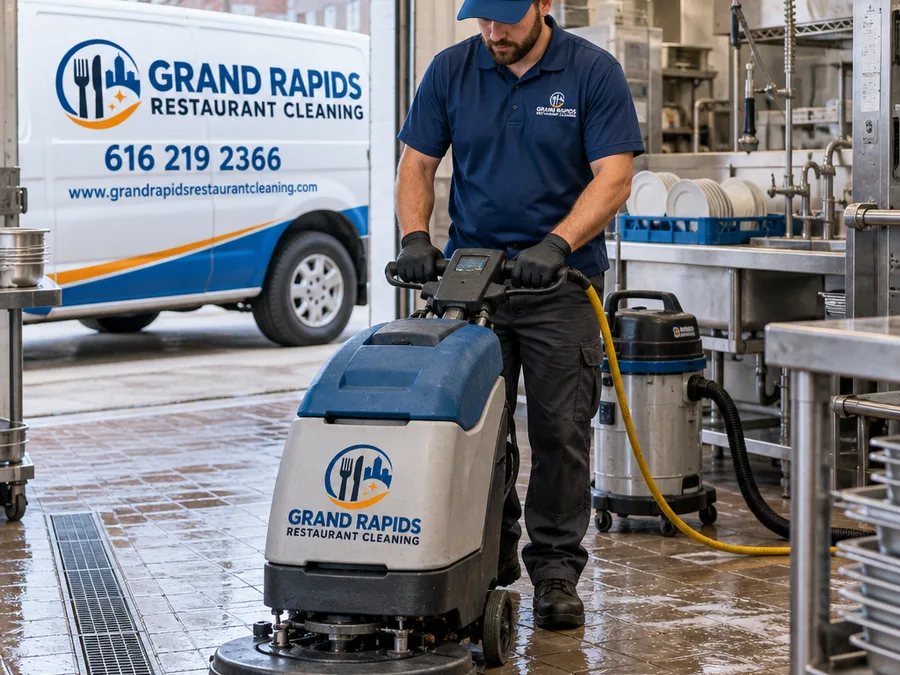
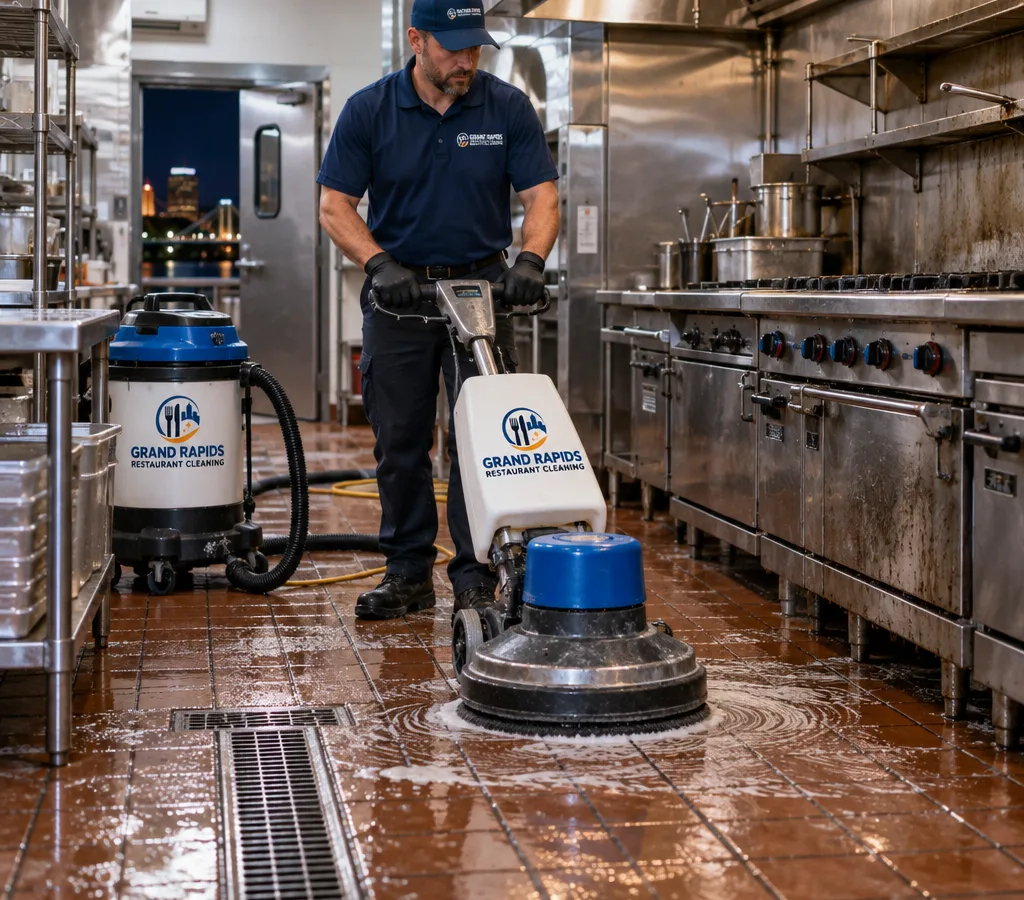
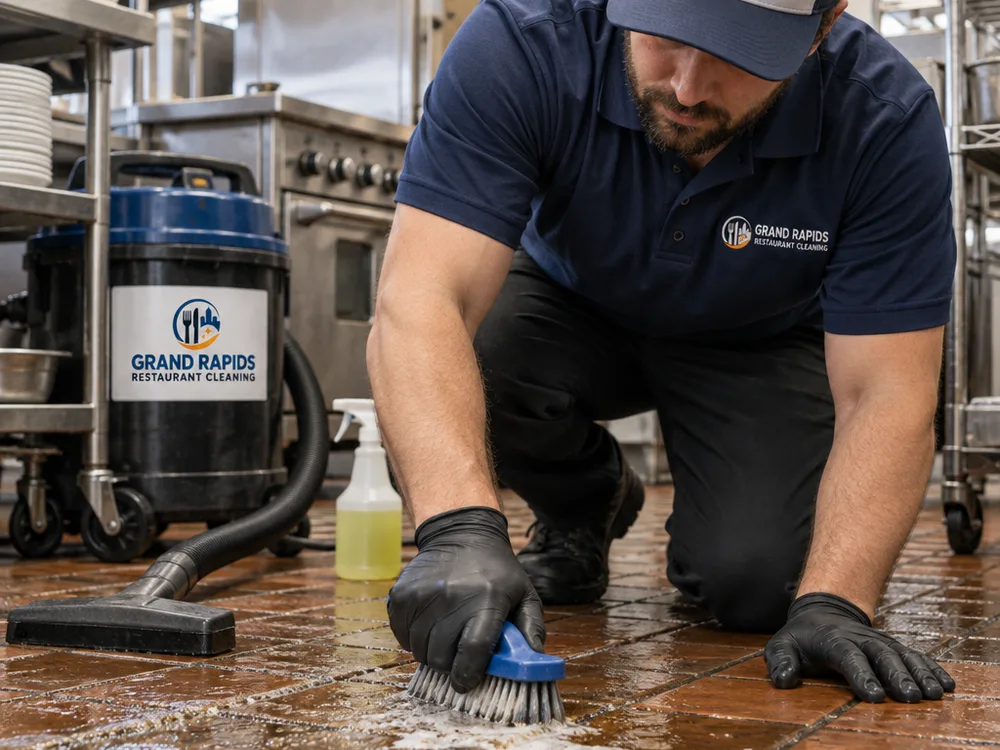
Typical steps include applying a commercial degreaser suited to the floor type and soil load, allowing proper dwell time—without letting product dry—mechanical agitation with brushes or a floor machine, and wet-vac recovery so grease and slurry are removed, not pushed into grout. Detail work matters. We hand-scrub edges, tight corners, and around fixed equipment legs where film builds up.
We also pay attention to safety while work is in progress: controlling overspray, keeping hoses managed, and using wet-floor signage so staff and vendors are protected. If your kitchen has sensitive areas—floor outlets, specific drain concerns, nearby storage—we plan the sequence so water and chemical use stays appropriate.
In Grand Rapids, winter adds tracked-in salt and grit that can scratch or dull some surfaces and make soil heavier near entrances. A seasonal adjustment to frequency and entry mats often helps keep the back-of-house from getting overwhelmed.
From walkthrough to final check
Step 1 of 5
We confirm the floor type—tile, quarry tile, epoxy, or sealed concrete—grout condition, and the worst buildup zones: fryers, ranges, dish, mop sink area, and traffic lanes.
Step 2 of 5
You get a clear scope that spells out what is included—open areas, edges, and behind movable items—and when it will be done so managers can plan prep and close-out tasks.
Step 3 of 5
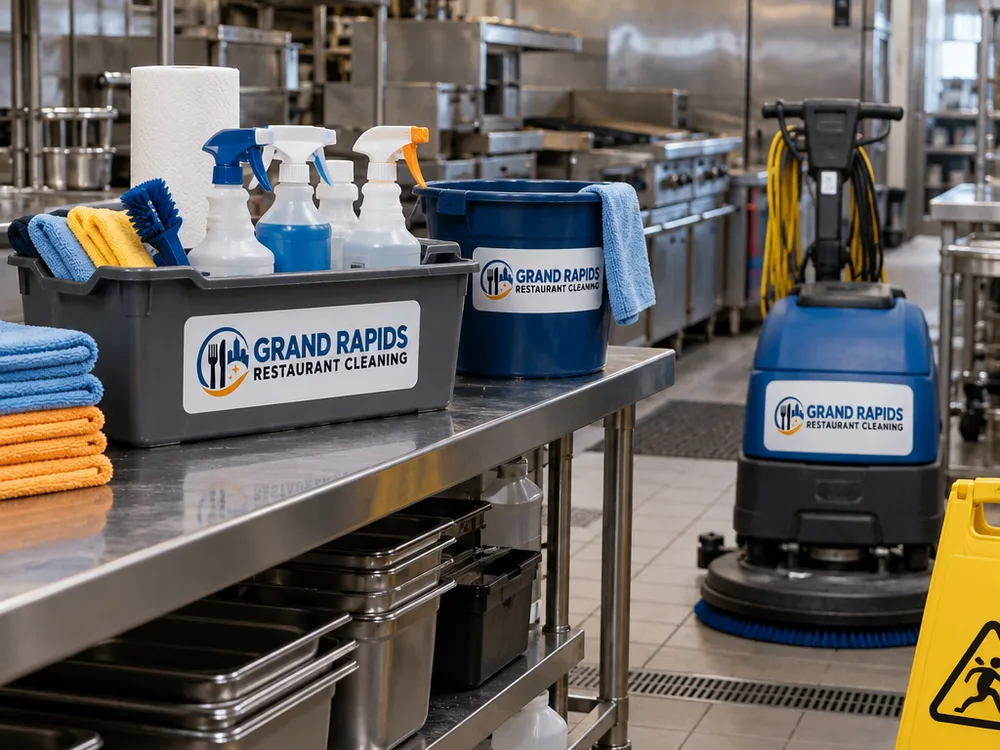
We stage equipment, place safety signage, and protect adjacent areas as needed. If there are areas that must stay dry, we isolate them and work in controlled sections.
Step 4 of 5
We apply degreaser, scrub with appropriate brushes or pads, then recover slurry with commercial vacs. Edges, corners, and grout lines get focused attention.
Step 5 of 5
We remove residues that can leave a film. Before we leave, we do a traction and appearance check with you or your lead so expectations are confirmed.
Scope-based floor cleaning
Commercial kitchen floor cleaning in Grand Rapids typically runs about $250 to $900+ per visit for most restaurant kitchens, depending on square footage and how heavy the grease buildup is. A small back-of-house tile area may be on the low end, while larger kitchens, multiple zones, or heavy grout restoration work price higher.
Final price changes with floor type—quarry tile versus smooth tile—grout depth and condition, edge detail work, access around equipment, hours required for after-close work, and whether a rinse or neutralization step is needed. The exact cost is confirmed after a walkthrough of your kitchen and the areas you want included.
Practical answers
Most kitchens benefit from deep degreasing on a set cadence, and the right frequency depends on fryer volume, menu, and traffic. High-output lines and heavy fry programs often need monthly service, while lighter operations may do it quarterly. A quick walkthrough in your Grand Rapids kitchen is the fastest way to set a schedule that matches the actual grease load and the slip risk areas.
Yes. The key is removing grease film completely and rinsing and recovering residues so nothing is left behind to act like a coating. Quarry tile has texture that holds oils; we use mechanical agitation and full wet recovery, then confirm the finish by checking the feel underfoot in the main traffic lanes before sign-off.
We clean around and behind items that can be safely moved with your approval and based on your policies. Fixed equipment typically gets detailed edge work and reachable sections. If you want behind heavy items, such as certain cooking equipment, included, we plan it during a slower window and coordinate what your team can relocate or what must remain in place.
It often helps when the odor source is grease and organic buildup on surrounding tile and grout. We focus on the floor area around drains where slime and film can develop, and we recover the slurry rather than pushing it toward the drain. If a drain itself needs a separate maintenance approach, we can flag what we're seeing during the walkthrough.
Clear the floor of loose items, remove floor mats if you want the mat area cleaned, and let us know any off-limits zones or chemical sensitivities. If your kitchen runs late close-outs, tell us the realistic time the line goes cold so we can schedule around hot surfaces and active foot traffic.
Yes. We can standardize a scope and cadence across locations so each kitchen gets the same type of degreasing and grout detail work. Central scheduling and consistent expectations are especially helpful when managers rotate or when you need the same cleaning outcome across different floor layouts.
Plan your floor-cleaning scope
Tell us what type of floor you have, when your kitchen is available, and which zones are giving you trouble. We will provide a written scope for commercial kitchen floor cleaning and a schedule that fits how your restaurant actually runs.